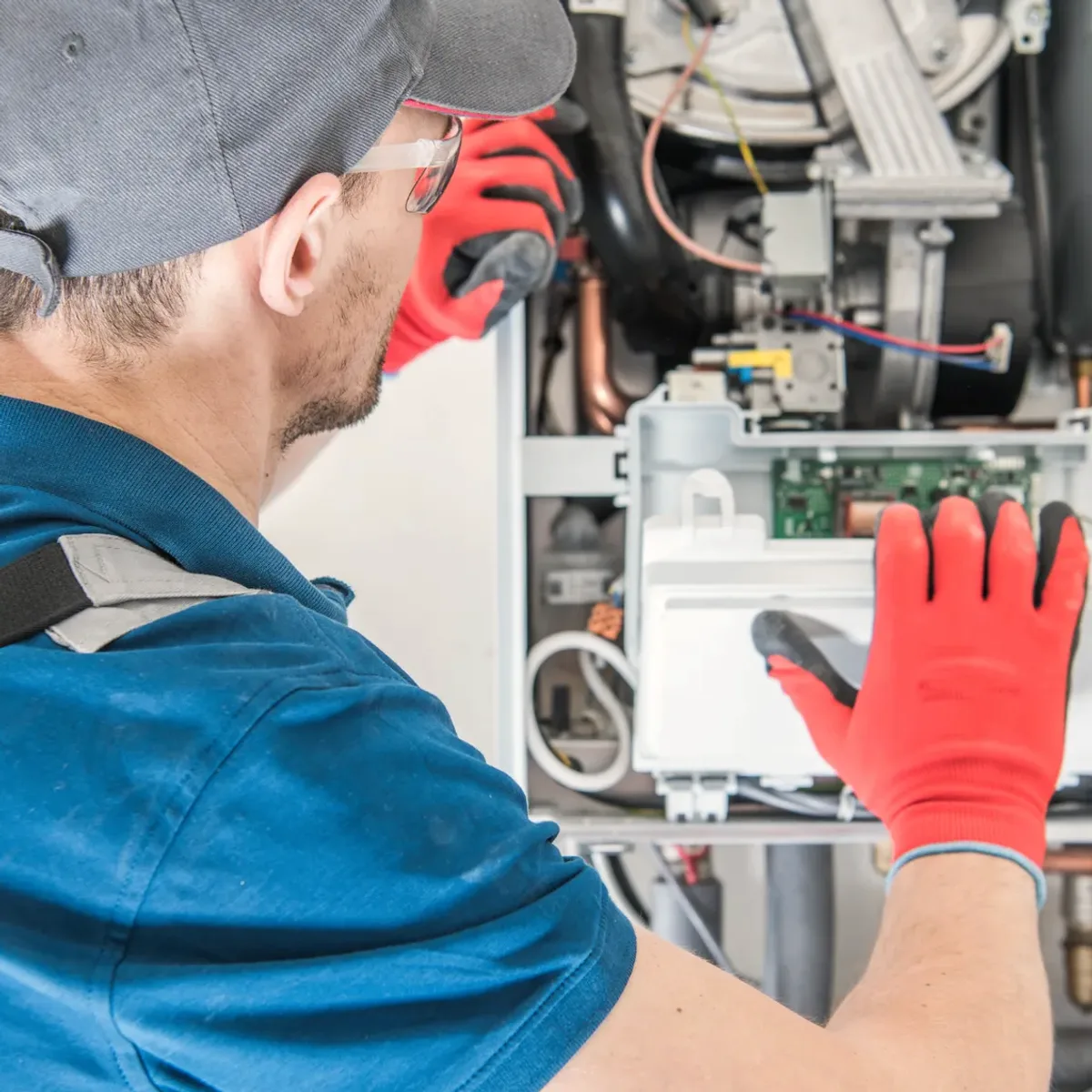
Request boiler service for a property in Windsor. Include the equipment, the problem or planned work, and your location so the request can be reviewed.
Is the boiler failing to heat, leaking, losing pressure, or serving radiators or in-floor loops?
Boiler service depends on the boiler design, fuel, and hydronic distribution. An older cast-iron natural-draft boiler feeding radiators presents different venting and control considerations from a condensing modulating boiler serving in-floor loops. A no-heat fault, a leak, and falling system pressure also require separate diagnosis. Records of fuel type, model, prior repairs, and distribution help distinguish repair, replacement planning, and maintenance without assuming that any one option is needed.
Record the boiler model, fuel, vent arrangement, distribution type, pressure behaviour, and any fault indicators. Ignition problems differ from circulator faults, pressure-relief discharge, or a system that repeatedly loses pressure. Inspection of the expansion tank and connected hydronic components can refine the diagnosis. For replacement planning, boiler type and compatibility with radiators or in-floor loops affect equipment selection and the installation scope.
Gas, propane, and oil boiler repair, including ignition and pressure faults
Cast-iron natural-draft and condensing modulating boiler distinctions
Radiator and in-floor-loop compatibility and inspection-led maintenance
Assessment and Scope
Questions for the Proposed Work
01
Separate ignition, circulation, and pressure faults
A boiler that will not fire may have an ignition or control fault, while a boiler that fires without moving heat through the system may involve the circulator or hydronic distribution. A pressure-relief valve discharge and a gradual pressure loss require different investigation, including assessment of the expansion tank and possible leakage. Record the observed symptom and system pressure behaviour; do not adjust pressure controls or operate internal components.
02
Match replacement planning to boiler and emitters
A cast-iron natural-draft boiler and a condensing modulating boiler have different venting, control, and operating requirements. Replacement planning should identify the fuel and inspect how the boiler serves radiators or in-floor loops. If the property uses propane or oil, the fuel supply and appliance requirements belong in the assessment; gas equipment has its own connection and venting considerations. These findings guide compatibility and scope rather than a generic equipment choice.
03
Use inspection findings to guide maintenance
Boiler maintenance should follow manufacturer instructions and the condition observed during inspection. Check the boiler, venting, burner or ignition components, controls, and hydronic connections as appropriate to the model and fuel. A system flush is not automatic; whether water-side work is justified depends on system design and inspection findings. Recording corrosion, leaks, or recurring pressure changes helps distinguish maintenance needs from repairs or a replacement discussion.
Compare the next step
Record whether the office emitter heats during the same call as other rooms in its zone. Ask whether the concern involves local delivery, balancing, room heat loss, or the boiler operation. Compare a targeted room correction with changes to central equipment using the actual workday comfort requirement and the effect on other rooms served by that zone.
Leave fuel, combustion, electrical, and pressure-system work to a qualified contractor. Do not adjust safety devices or repeatedly add water to a system with an unexplained leak or pressure loss.