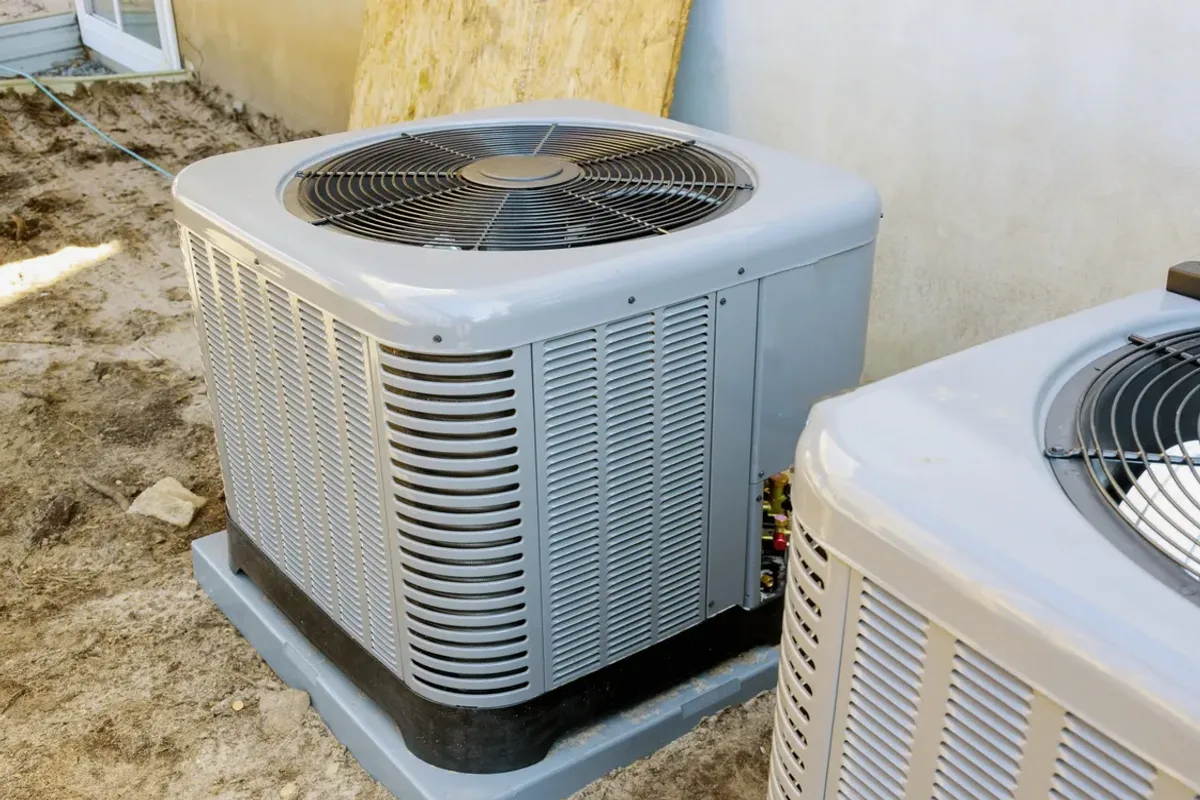
Is the air conditioner running without cooling, moving little air, making noise, or failing to start?
Air-conditioning repair starts with the system type and the conditions under which cooling changes. A central air conditioner depends on both the outdoor equipment and the duct system, while a ductless mini-split delivers air through indoor heads. Warm supply air, weak airflow, unusual noise, or failure to start do not point to the same fault. Records of earlier repairs and inspection findings help separate a repair from maintenance or a replacement comparison.
Record whether the equipment is central or ductless, what the indoor and outdoor sections are doing, and whether airflow differs by room or indoor head. Inspection can compare airflow and coil condition with electrical components such as capacitors, contactors, fan motors, or board fuses. Refrigerant concerns require qualified system diagnosis, not occupant handling. Those distinctions establish whether the scope is a component repair, airflow work, or further evaluation.
Central-air and ductless mini-split fault diagnosis
Static pressure, filters, grilles, coils, and duct airflow
Capacitors, contactors, fan motors, board fuses, and refrigerant diagnosis
Assessment and Scope
Questions for the Proposed Work
01
Distinguish equipment faults from airflow limits
Warm air or weak cooling can arise from different causes, so checking only the outdoor unit may miss a restriction in the ductwork or at a return grille. For central systems, static-pressure readings and filter and grille condition provide evidence about airflow. In a ductless system, compare the affected indoor head with the others. Coil condition, fan operation, and observed airflow help define whether the repair concerns the equipment or air distribution.
02
Identify electrical and refrigerant concerns
A system that will not start may have an electrical fault involving a capacitor, contactor, fan motor, or board fuse. Noise or a stopped outdoor fan adds useful clues but does not confirm a failed part. Refrigerant condition also needs instrumented diagnosis and must not be handled by occupants. Inspection results should identify the confirmed fault and explain whether a repair is appropriate or more testing is needed.
03
Compare repair with replacement on findings
Age alone does not determine whether an air conditioner should be repaired or replaced. Compare the confirmed repair, the condition of major components such as the compressor, the system’s service history, and compatibility with the existing air distribution. A minor electrical fault and a major compressor problem represent different decisions. A clear assessment separates the immediate repair option from any replacement comparison without assuming either is necessary.
Compare the next step
List the office equipment, occupancy hours, and periods of direct sun. Ask whether the existing system is cooling normally elsewhere and what assessment is needed in the office. A useful proposal explains whether it addresses an AC fault, local heat gain, air delivery, or independent zone control.
Do not open electrical panels or handle refrigerant. If ice, water near electrical equipment, or abnormal operation is present, stop using the affected system and request an assessment.